LaunchFilter

Which directory submission sites are actually worth submitting to

For indie makers and small product teams, “worth it” is not the longest list you can find. It is a shortlist that fits your product, your budget, and your week — plus a plan to check that the listing stayed live after you hit submit.

Before you spray forms or buy a bulk package, filter each board on four plain checks: fee, login, backlink, and last checked. Then open the scored library and build that shortlist where you can act.

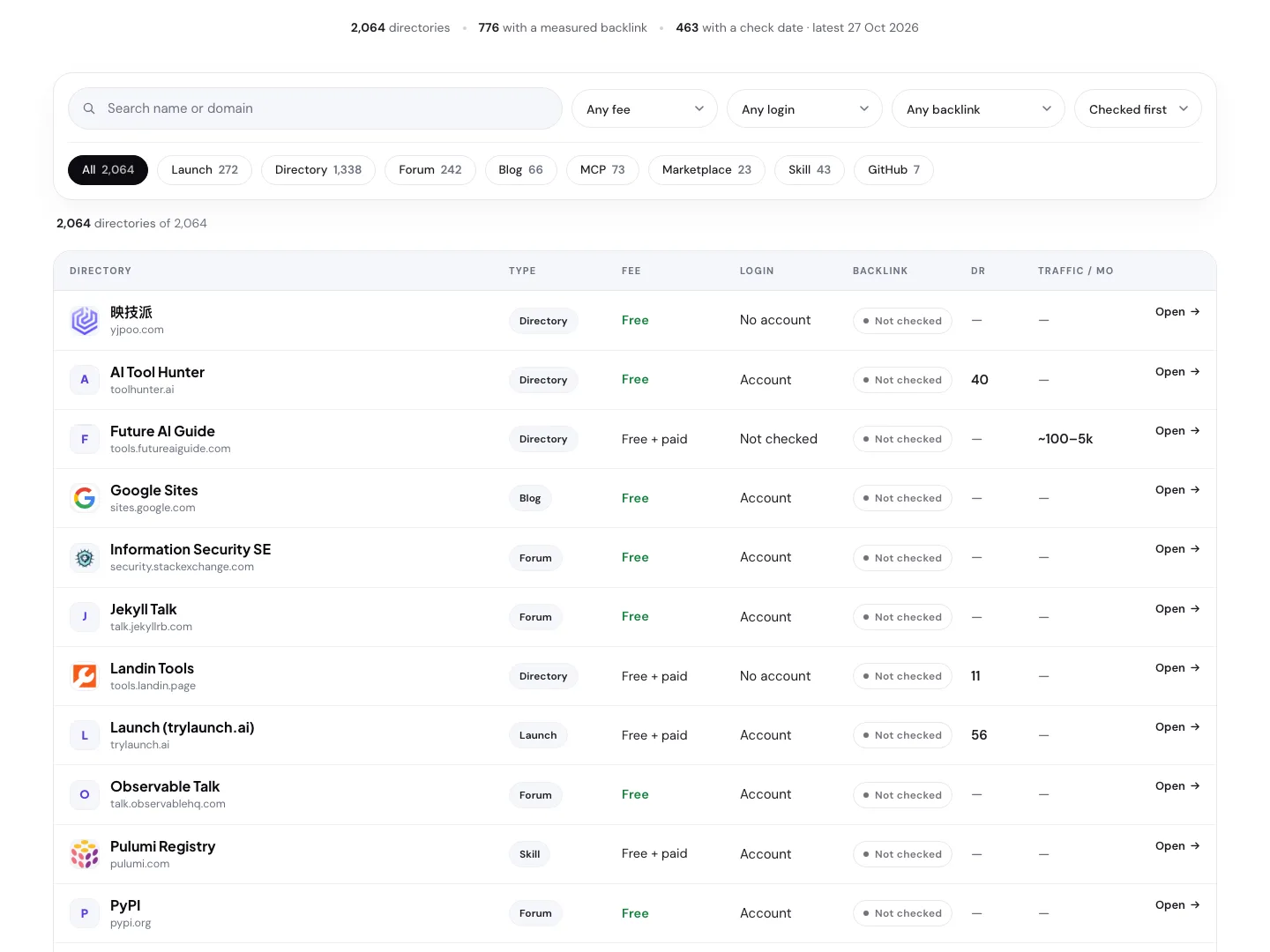
The LaunchFilter directories library with search, fee/login/backlink filters and rows showing fee, login and backlink facts.

Are startup directories worth it?

Yes — for many indie and small SaaS teams — if you treat them as selective discovery and category presence, not a growth channel that replaces product, distribution, or real conversations.

What they can do

  • Put you in front of people who already browse that board (launch day, alternatives search, niche AI/dev lists).
  • Leave a public listing you can point to later.
  • Occasionally give a followed link — often only on a paid tier, a featured slot, or after you trade a badge.

What they usually cannot

  • Replace a real launch plan.
  • Guarantee traffic before you submit.
  • Stay useful forever without anyone checking them again.

Founders asking the same question on Reddit and X keep landing on the same pattern: a few named boards still feel useful; long “top 100 / top 200” paste lists feel outdated or spammy; blindly submitting to everything burns hours. Industry write-ups that actually open live pages keep finding the same traps — free that is really a queue, links that are nofollow or paywalled, and directories that go quiet or worse. Treat those as reasons to shortlist, not to invent a traffic forecast.

If a board does not match your product, skip it even when someone promises a “DR” win. Audience fit beats spreadsheet theater.

What makes a submission site worth it

Worth submitting to means: this board is worth your next form — not that it is famous.

Use these four checks on every candidate. They map 1:1 to how you should filter a living library.

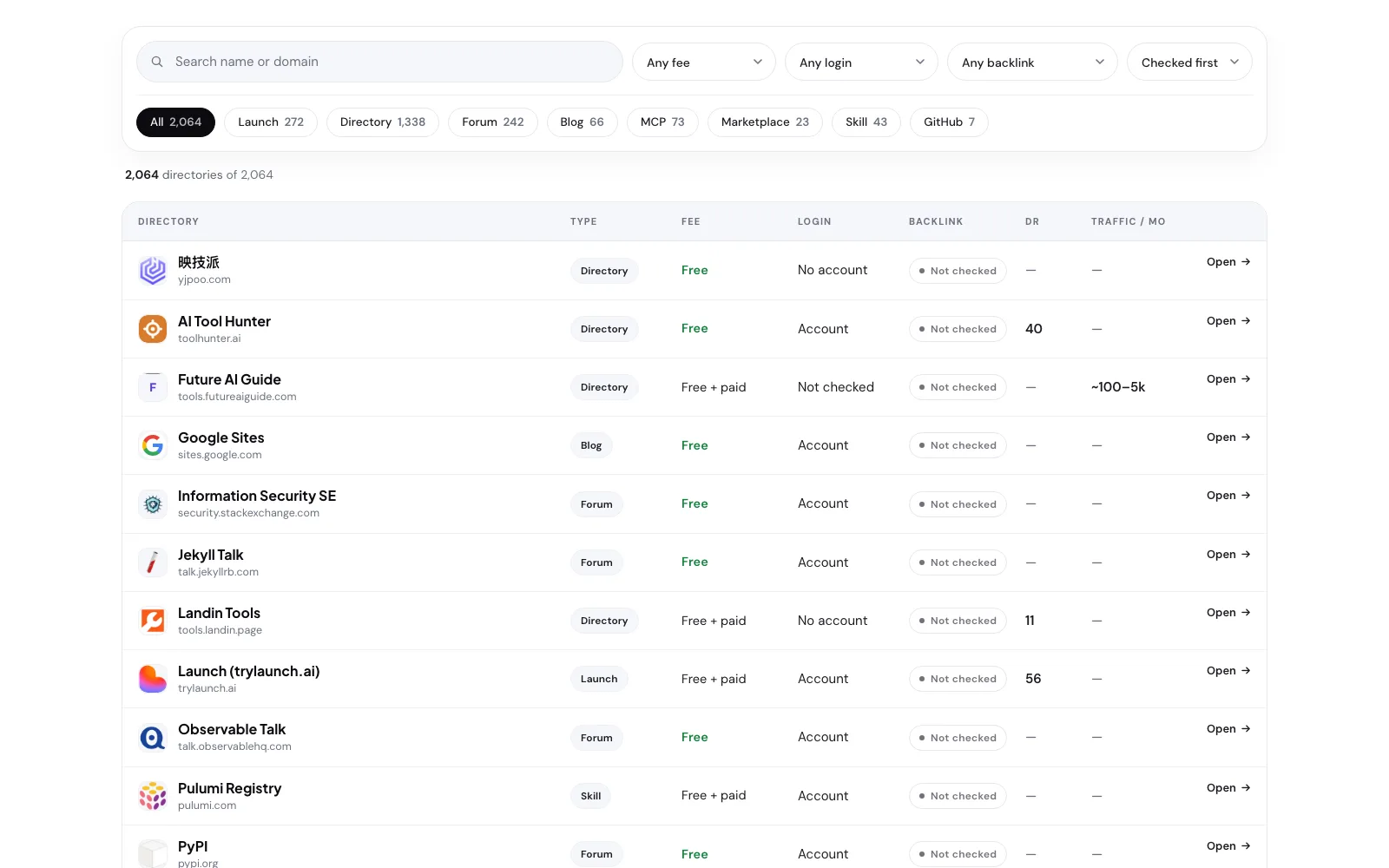
Close-up of the LaunchFilter filter row and the directory table headers for fee, login and backlink, with the checked-first sort.

Read the site’s own pricing page the day you submit.

  • Free — still ask what free costs: wait time, badge-for-link, mandatory backlink, or a one-listing free tier.
  • Free + paid extras — common. Free queue, paid skip; free listing, paid feature.
  • Paid only — fine if the audience is right and you know what you buy.
  • Not checked — do not guess. Open the page or skip.

“Free” is often a gated funnel. Founders keep reporting multi-year free queues, pay-to-skip lanes, and “fast” upgrades that still miss a launch date. Price the time as well as the invoice.


How we test a directory before you submit

Do this in one sitting. Stop when you have a list you can finish.

Step 1 of 7: Decide the job.

  1. Step 2 of 7: Filter fee / login / backlink.
  2. Step 3 of 7: Prefer recent last-checked.
  3. Step 4 of 7: Match type to product.
  4. Step 5 of 7: Cap the first pass at about 10–20.
  5. Step 6 of 7: Build one submission kit.
  6. Step 7 of 7: Track and re-check.

Step 1 of 7

Decide the job.

Visitors on launch week, a durable category listing, a followed link, or presence for buyers/partners. Pick one primary job.

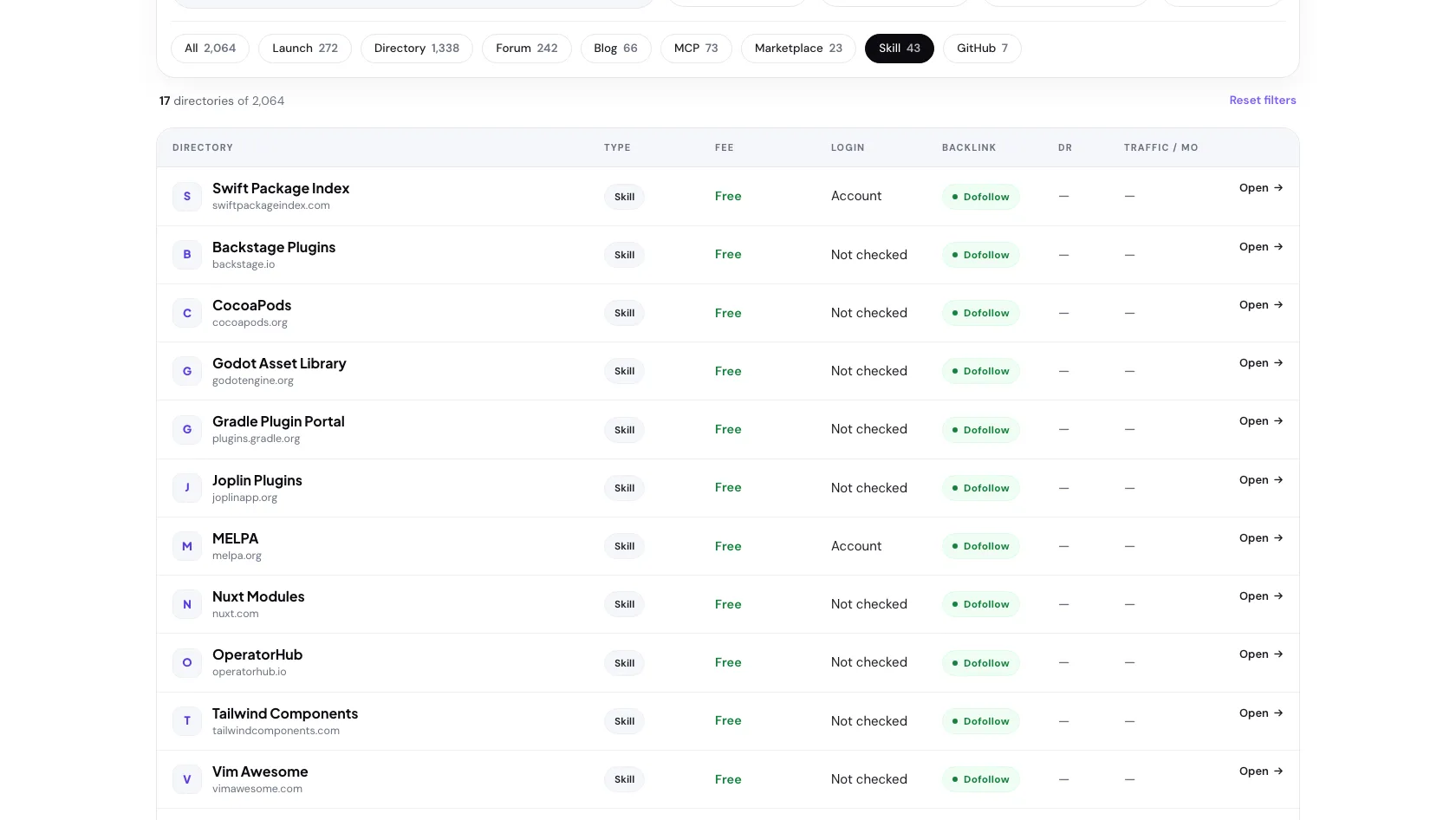
A 17-row LaunchFilter shortlist after free, dofollow and skill filters, with fee, login and backlink columns.

How many should you submit to?

Start with roughly 10–20 that fit. Mass-submitting to hundreds mostly adds accounts, badges, and spreadsheet admin. Founders who publish giant lists almost always add the same warning: do not submit to all of them — pick the ones that fit what you built.

Widen the list only after you have measured what the first wave actually returned.

Named boards (Product Hunt, Indie Hackers, AlternativeTo, G2, and similar) are illustrations of kinds of places — not a second ranked mega-table. The action table lives on /directories.

Sites we would skip

Hitting “submit” is the middle of the job, not the end.

Pending

1
  • Pending

    waiting on review, queue, or email confirm.

Live

1
  • Live

    public URL exists; open it and confirm your link and category.

Blocked

1
  • Blocked / rejected / vanished

    form “worked,” listing did not stick, or the page died later.

Re-check the public URL on a schedule you can keep (for example: day 1, week 1, month 1). Note what analytics actually attributed. That loop is how directories stay useful instead of becoming a graveyard of unchecked rows.

LaunchFilter is built around that loop: score and filter first, submit carefully, then re-check — not a one-shot dump into a static top-N.

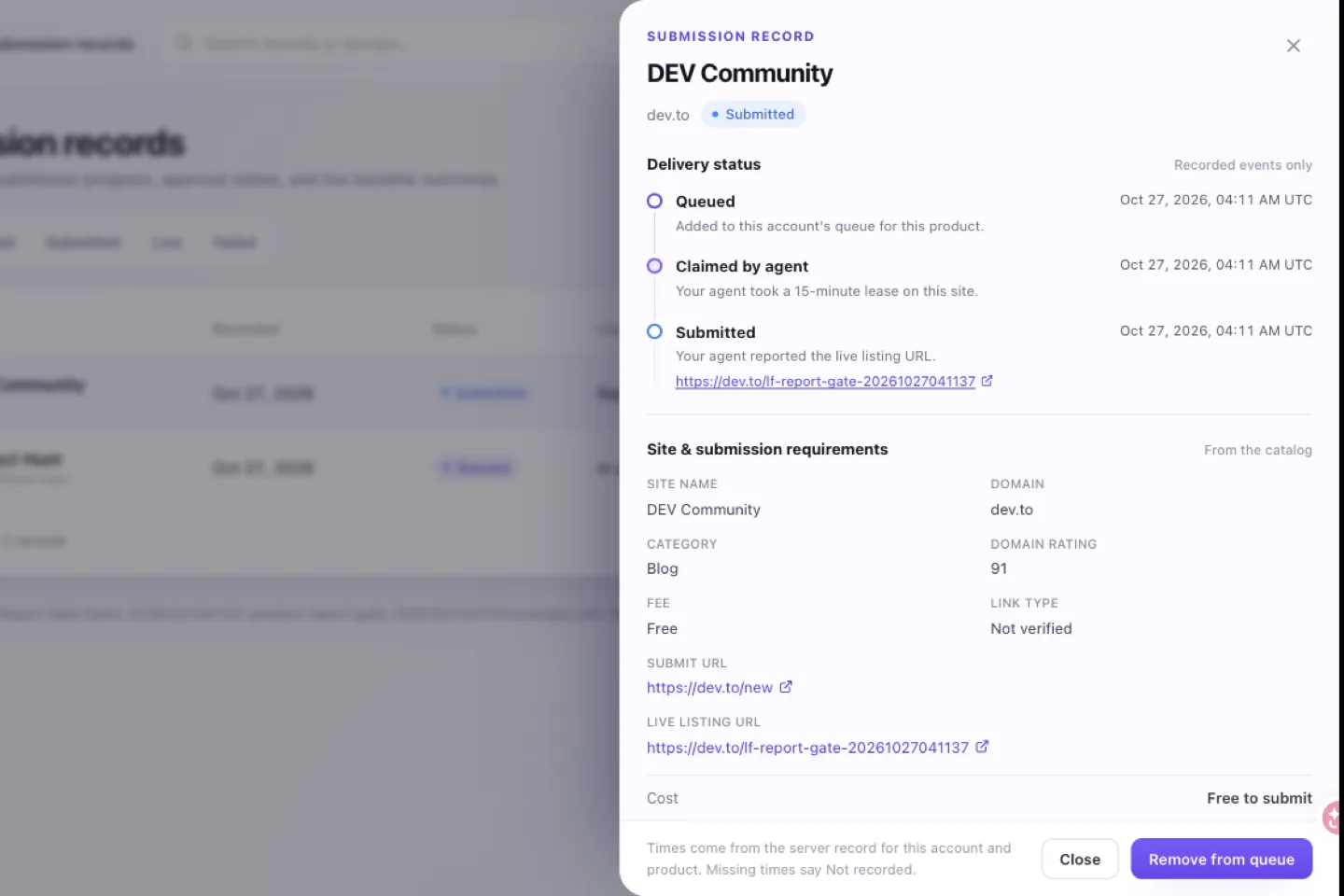
A LaunchFilter submission record showing queued, claimed by agent and submitted states with the live listing URL and site requirements.
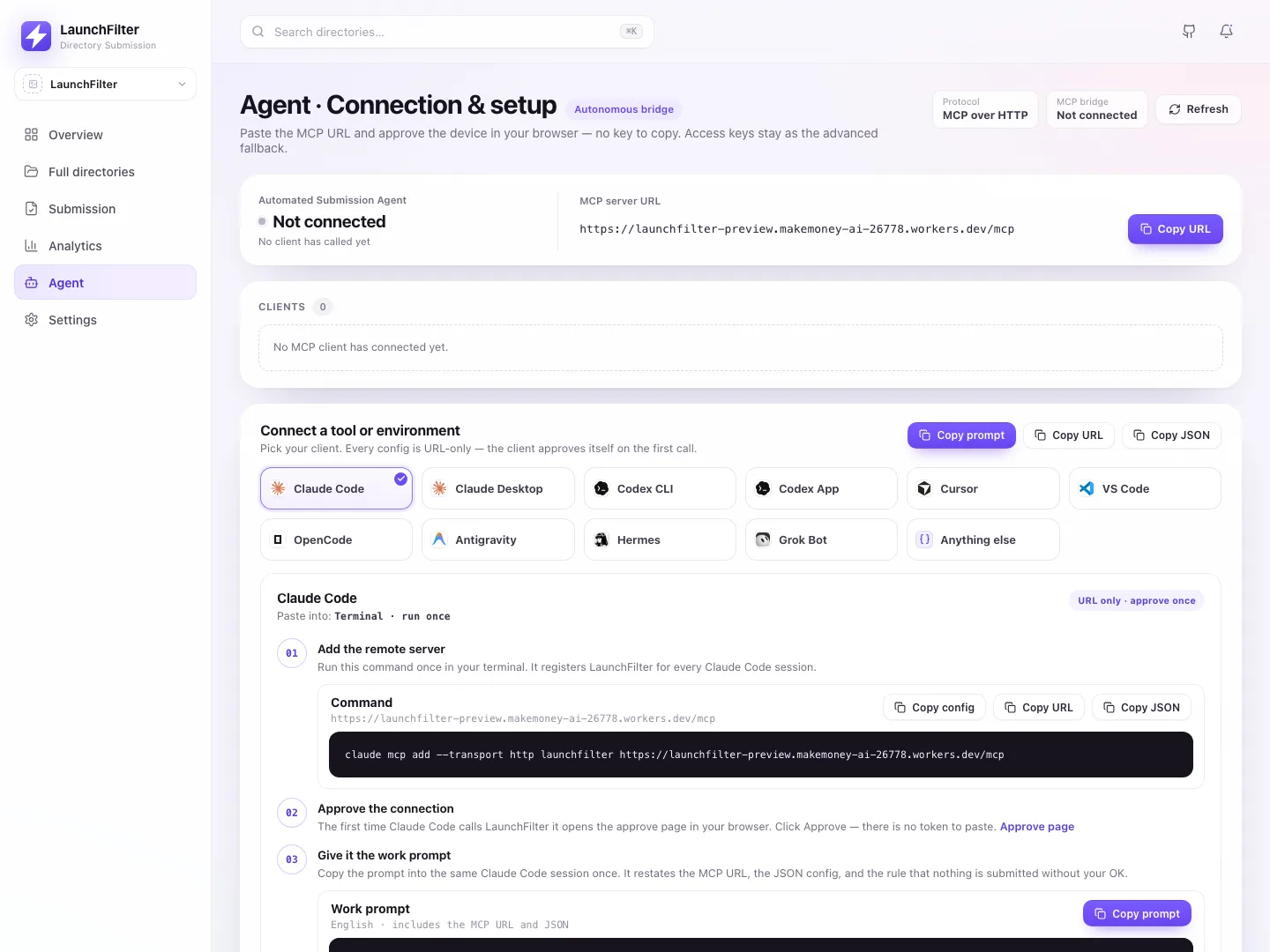
The LaunchFilter Agent page with the MCP server URL, supported clients, and the browser approval steps that keep submission in the user's session.

Where LaunchFilter fits (without ghost-submitting)

LaunchFilter is a decision library for startup directories: which ones are worth submitting to, and which to skip.

What it does

  • Lets you browse and filter on fee, login, backlink behavior, and last-checked (plus fit) instead of copying a blog list.
  • Helps you build a shortlist you can finish.
  • Lets your own AI agent (MCP) fill forms in your browser when you choose to act.
  • Tracks and re-checks listings so “submitted” does not mean “forgotten.”

What it does not

  • Ghost-submit on your behalf.
  • Take directory passwords.
  • Promise traffic numbers it cannot see.

We do not submit your product for you. You stay in control of accounts, email confirms, and what goes live.

Frequently Asked Questions

Answers for indie and small SaaS teams

Which startup directories are worth submitting to?

The ones that fit your product and budget on fee, login friction, and backlink behavior — and that still look alive on a recent check. Skip bulk lists of hundreds. Build a shortlist of roughly 10–20 directories you can prepare for, submit carefully, then verify the public listing stayed up. A filterable library with fee, login, backlink, and last-checked columns is faster than copying a static “top 100.”

Are startup directories worth it?

Yes for many indie and small SaaS teams — when you treat them as selective discovery and presence, not a growth channel that replaces real distribution. Active, category-matched directories can send a small wave of visitors and a durable listing; stale or opaque ones mostly cost time. Cap spend and hours up front, prefer recent checks over Domain Rating alone, and measure whether each listing stays live.

How do I choose startup directories for an indie SaaS?

Decide what you want first (visitors, a followed link, or category presence). Filter by fee, whether you need an account or invite, and whether listing links are dofollow, nofollow, or not checked. Match directory type to your product, keep the first pass to a short list, submit with a reusable kit, then track each result as pending, live, or blocked and re-check the URL instead of assuming the form worked.

How many startup directories should I submit to?

About 10–20 on the first pass is enough for most indie teams. More than that usually means weaker prep, more login debt, and less re-checking. Expand only after you see what the first shortlist returned.

Are free startup directory submissions actually free?

Often not fully. Free may still mean a long queue, a badge-for-link trade, a one-listing cap, or a paid lane to launch on time. Read the pricing page the day you submit, and price your time.

Is it worth paying a directory submission service?

Only if you can see when each site was last checked, which ones are paid-only, what link you get, whose accounts are used, and whether you will see live listing URLs afterward. A big count with no re-check is usually admin theater. LaunchFilter does not ghost-submit or take directory passwords — your agent fills forms in your browser, and you stay in the loop.

Do startup directory listings bring real traffic?

Sometimes — when the board’s audience matches your product. Nobody can promise your traffic in advance. Check referrers after each listing goes live, and drop boards that never show up.

What should I check after I submit?

Confirm pending vs live vs blocked, open the public listing URL, verify your link and category, and re-check later. Form success is not the finish line.

Sort the boards before you submit

Worth submitting to means this board is worth your next form, not that it is famous. Start 7 days for $0